TL;DR: Slow travel is gaining popularity as travelers move away from rushed itineraries and highly curated luxury experiences in favor of longer stays, local experiences, and a deeper connection with the places they visit. By staying longer in fewer destinations, travelers can often reduce costs, travel more sustainably, experience everyday local life, and return home feeling genuinely rested rather than exhausted. Remote work has also made extended stays more practical for many people. While slow travel requires time and flexibility, its core principle is simple: travel less quickly and experience more deeply.
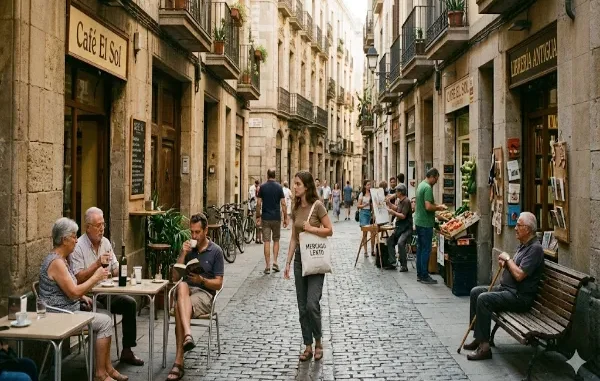
Something quietly significant is happening in the world of travel. After decades of aspiring toward five-star hotels, first-class flights, and whirlwind itineraries packed with famous landmarks, a growing number of modern travelers are choosing to do the opposite. They are staying longer in fewer places. They are renting apartments instead of booking resorts. They are eating where the locals eat, learning a few words of the local language, walking streets that do not appear in any guidebook, and returning home not with a suitcase full of souvenirs but with something harder to name — a genuine sense of having been somewhere, rather than merely passing through.
This movement has a name: slow travel. And it is reshaping how millions of people around the world think about what a vacation is actually for.
Key Takeaways
- Slow travel prioritizes depth, connection, and presence over visiting as many destinations as possible.
- Staying longer in one place can reduce transportation, accommodation, and dining costs compared with fast-paced or luxury travel.
- Remote work has made two-week and month-long stays more accessible to many travelers.
- Slow travel can reduce the number of flights taken and encourage greater use of trains, public transportation, cycling, and walking.
- Spending more time in one destination can create stronger connections with local people, food, culture, and everyday life.
- Slow travel may offer more opportunities for rest and recovery than tightly packed itineraries.
- Luxury and slow travel are not mutually exclusive; the key difference is whether the trip prioritizes comfort and exclusivity or immersion and connection.
- Slow travel is not limited to long international trips. A week spent exploring one nearby destination can follow the same philosophy.
- Time and flexibility can make extended slow travel difficult for some people, so the approach is not equally accessible to everyone.
- Ultimately, slow travel is about experiencing a place rather than simply passing through it.
What Is Slow Travel, Exactly?
Slow travel is not a fixed set of rules or a formal travel style with a membership card. It is better understood as a philosophy — a deliberate rejection of the rush that defines so much modern tourism. Where conventional travel maximizes destinations visited per unit of time, slow travel maximizes depth of experience per destination. Where luxury travel often measures success in the quality of the hotel room or the exclusivity of the restaurant, slow travel measures success in connection, understanding, and presence.
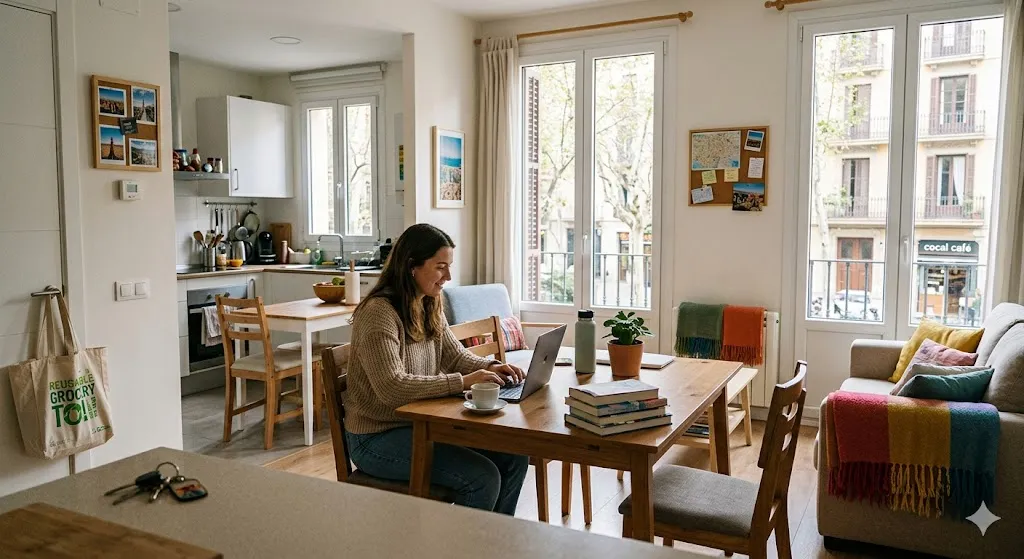
In practical terms, slow travel often looks like this: instead of spending ten days visiting seven European cities, a slow traveler might spend ten days in a single city — or even a single neighborhood within that city. Instead of booking a hotel, they might rent a small apartment, buy groceries at the local market, cook some of their own meals, and develop a morning routine that includes a particular café where they begin to recognize the barista by name.
The concept has roots in the broader “slow movement” that emerged in the late 1980s, beginning with the Slow Food movement in Italy as a protest against the opening of a McDonald’s near the Spanish Steps in Rome. The core idea — that faster is not always better, and that speed comes at the cost of quality, depth, and meaning — eventually spread into travel, architecture, urban design, and many other domains of life.
The Burnout Behind the Shift
To understand why slow travel is resonating so powerfully right now, it helps to understand what travelers are running away from, not just what they are running toward.
The last decade has seen a dramatic intensification of the pace of modern life. Smartphones have made work a 24-hour presence. Social media has created relentless pressure to document, perform, and consume at speed. The rise of the “hustle culture” ethos in many Western countries has made busyness a badge of honor and rest something to feel guilty about. Leisure time has become scarce, and when it does arrive, there is enormous pressure to use it “correctly” — to have experiences worth posting about, itineraries worth admiring, destinations worth envying.
The traditional luxury vacation, in this context, often becomes an extension of the same exhausting performance. Fourteen countries in fourteen days. Every famous monument ticked off. Every Michelin-starred meal documented. Every infinity pool photographed from the same angle that appears in a thousand other photographs. Travelers return from these trips needing, as the old joke goes, another vacation to recover from their vacation.
Slow travel is, in part, a reaction to this exhaustion. It is an attempt to make the vacation itself feel like rest rather than a compressed sprint through a curated highlight reel. When travelers talk about why they chose to spend three weeks in a single small town in Portugal rather than racing across five countries, the word they use most often is not “interesting” or “affordable” — it is “sane.”
The Experience Economy and the Hunger for Authenticity
Beyond burnout, there is a deeper cultural shift at work — one that economists and sociologists have been tracking for years. Researchers Joseph Pine and James Gilmore described it in their influential 1999 book as the rise of the “experience economy”: the observation that as societies grow wealthier, people increasingly value experiences over possessions, and authentic experiences over manufactured or curated ones.
Luxury travel, by its very nature, tends to insulate travelers from the genuine texture of the places they visit. A five-star resort in Bali can be extraordinarily beautiful, comfortable, and expensive — and also almost entirely disconnected from anything authentically Balinese. The food is internationally calibrated. The staff is trained to the point of invisibility. The environment is so perfected that it functions more like a high-end stage set than a real place. Travelers are comfortable, pampered, and — this is the word many of them use when they return — slightly disappointed.
Slow travel promises the opposite. By staying longer, living more like a local, and resisting the pull of the tourist infrastructure, slow travelers are more likely to encounter the unexpected, the imperfect, the genuinely local. The neighborhood argument that teaches you something about local politics. The grandmotherly neighbor who insists on giving you vegetables from her garden. The rainstorm that forces you to take shelter in a bar and ends up being one of the best afternoons of your trip. None of these can be booked in advance, and none of them appear in any travel brochure. But they are, for most slow travelers, precisely what they are looking for.
The Financial Logic of Slow Travel
One of the most counterintuitive aspects of slow travel is that it is often significantly cheaper than the luxury travel it is replacing — not as a compromise, but as a direct consequence of its core principles.
When you stay in one place for two or three weeks rather than hopping between destinations, several major costs collapse. You take one flight instead of six. You rent an apartment rather than booking hotel rooms, and apartment rates drop dramatically for longer stays — it is not unusual to pay less per week for a well-located apartment in a European city than for a single night in a comparable hotel. You buy groceries and cook some of your own meals, not because you cannot afford restaurants but because going to the local market is one of the pleasures of the trip. You do not take expensive organized tours because you have enough time to figure things out yourself.
The money saved on logistics can be redirected in ways that genuinely enhance the experience — a cooking class with a local chef, a longer stay in a more beautiful location, or simply the financial breathing room that makes the whole trip feel less pressured. Many slow travelers report that their slow trips cost the same or less than equivalent luxury vacations while feeling considerably more rewarding.
This financial logic is particularly compelling for digital nomads and remote workers, who have discovered that slow travel aligns perfectly with the rhythms of working abroad. If you are going to be working from your laptop anyway, there is no practical reason not to work from an apartment in Lisbon or a rented house in the Yucatán — and considerable reason to prefer it over a hotel room.
The Environmental Argument
The environmental dimension of slow travel deserves serious attention, and it is one that an increasing number of travelers are taking seriously as awareness of aviation’s carbon footprint has grown.
Air travel is one of the most carbon-intensive activities an individual can undertake. A single return flight from New York to London produces roughly the same carbon emissions as several months of average driving. For travelers who are genuinely concerned about their environmental impact — and polling consistently shows that this number is growing, particularly among younger generations — the conventional multi-destination, multi-flight vacation creates a real moral tension.
Slow travel offers a partial resolution to this tension. By flying less and staying longer, travelers dramatically reduce their per-trip emissions. A traveler who takes one long trip with a single return flight has a fraction of the aviation footprint of a traveler who takes six short trips to six different destinations over the same period, even if the total days traveled are identical. This is not a complete solution to the environmental costs of travel, and slow travelers should not claim an entirely clean conscience — but the reduction is meaningful and real.
Beyond the carbon arithmetic, slow travel tends to produce other environmental benefits as well. Slow travelers are more likely to use local transportation — trains, buses, bicycles, and their own feet — rather than taxis and rental cars. They are more likely to shop at local markets than at tourist shops with globally shipped goods. They are more likely to develop genuine respect and care for the places they visit, simply because they spend enough time there to feel something like belonging.
What Slow Travel Does to Your Brain
There is a growing body of psychological research on what different styles of travel actually do to mental wellbeing, and the findings are not particularly flattering to the conventional hurried vacation.
Studies on vacation recovery — the speed at which people return to baseline stress levels after returning from a trip — consistently show that the recovery effect of a vacation fades within days to a week or two for most people. The anticipation before the trip, interestingly, often produces more lasting positive effects than the trip itself. Part of the reason the recovery effect fades so quickly is that rushed vacations are themselves stressful — they involve constant decisions, logistics, unfamiliar environments, and the pressure to have a good time.
Slow travel, by contrast, tends to produce what psychologists call “restorative experiences” — environments and activities that allow the directed attention required by work and modern life to genuinely rest and recover. Natural environments are particularly powerful in this respect, as decades of research on “attention restoration theory” has shown. But the key elements of a restorative experience — a sense of being away, fascination with the environment, a feeling of extent or scope, and compatibility with one’s inclinations — are all more easily achieved by a slow traveler who has time to settle into a place than by someone racing through it with a packed itinerary.
Many slow travelers also report benefits that go beyond simple rest: increased creativity, a refreshed perspective on their ordinary lives, a greater capacity for presence and attention. When you spend two weeks in a single neighborhood rather than two days, you begin to notice things — the way the light changes at different times of day, the rhythm of local life, small details that would be entirely invisible to someone passing through in a day. This quality of attention, rare in modern life, appears to have genuinely restorative effects on the mind.
The Social Dimension: Connections That Actually Last
One of the most consistent themes in slow travelers’ accounts of their experiences is the quality of the human connections they make — and how different these are from the surface-level encounters that characterize most conventional tourism.
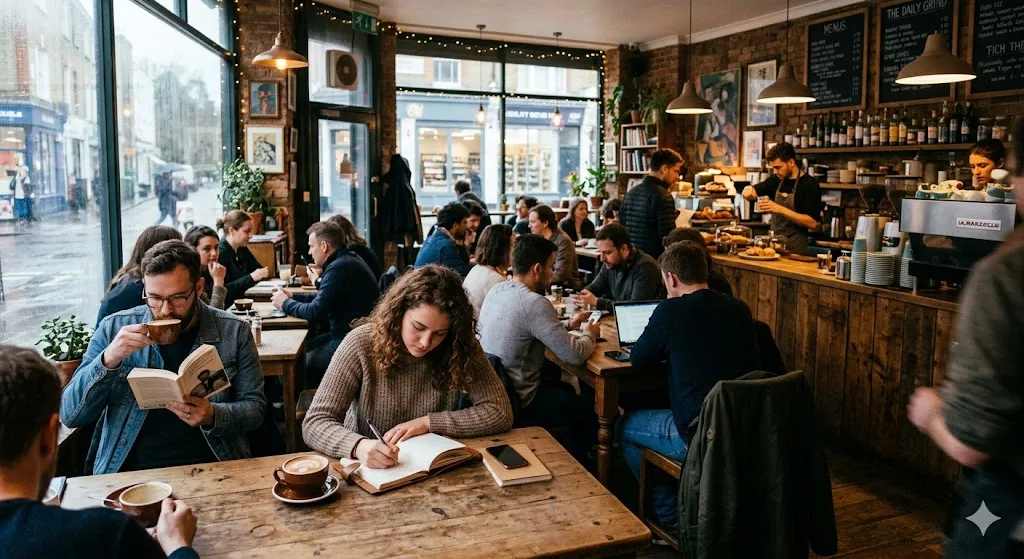
When you stay somewhere for a week or more rather than a night or two, something changes in how you relate to the people around you. The guard that both locals and tourists keep up in brief encounters begins to drop. The café owner starts asking about your day. The neighbors wave. The local at the bar who initially seemed suspicious of yet another tourist begins to talk to you — really talk, not in the performative way that tourist interactions so often involve. You become, temporarily, something closer to a person than a transaction.
These connections are frequently cited by slow travelers as the most memorable and meaningful part of their experiences. Not the famous monument or the Michelin meal, but the afternoon spent talking with an elderly fisherman about the changes in the town over fifty years, or the spontaneous dinner invitation from a local family that turns into a four-hour education in a culture you barely knew existed.
Luxury travel, by virtue of its structures — the hotel staff trained to maintain professional distance, the organized tours that move people efficiently from one experience to the next, the resort that exists specifically to separate guests from the surrounding environment — actively impedes these kinds of connections. The product is seamless comfort, not genuine encounter. Many luxury travelers get exactly what they paid for and find, when they are honest with themselves, that it was not quite enough.
The Rise of the 15-Day and Month-Long Trip
The logistical structure of slow travel has been significantly enabled by changes in the nature of work itself. The pandemic-era normalization of remote work created an entirely new relationship between location and employment for tens of millions of people. When your office is your laptop, your office can be anywhere with reliable internet. This shift has made the extended stay not just possible but appealing in entirely new ways.
Data from travel platforms consistently shows a dramatic increase in bookings for stays of two weeks or longer since 2020. Airbnb reported that long-term stays — defined as twenty-eight days or more — became its fastest-growing segment in the years following the pandemic. Destination cities that were previously dominated by two and three-night visits began seeing a new class of visitor: the person who books a neighborhood apartment for a month, sets up a temporary home office, and settles into a rhythm of work, exploration, and daily life that is indistinguishable from how locals live — except that they are doing it somewhere far from home.
This model does not require being a digital nomad in the conventional sense. Plenty of slow travelers are not remote workers at all — they simply take longer, fewer vacations rather than shorter, more frequent ones. An employee with three weeks of annual leave who takes one slow trip rather than three quick ones makes a fundamentally different choice about what travel is for.
How Slow Travel Changes the Meaning of “Destination”
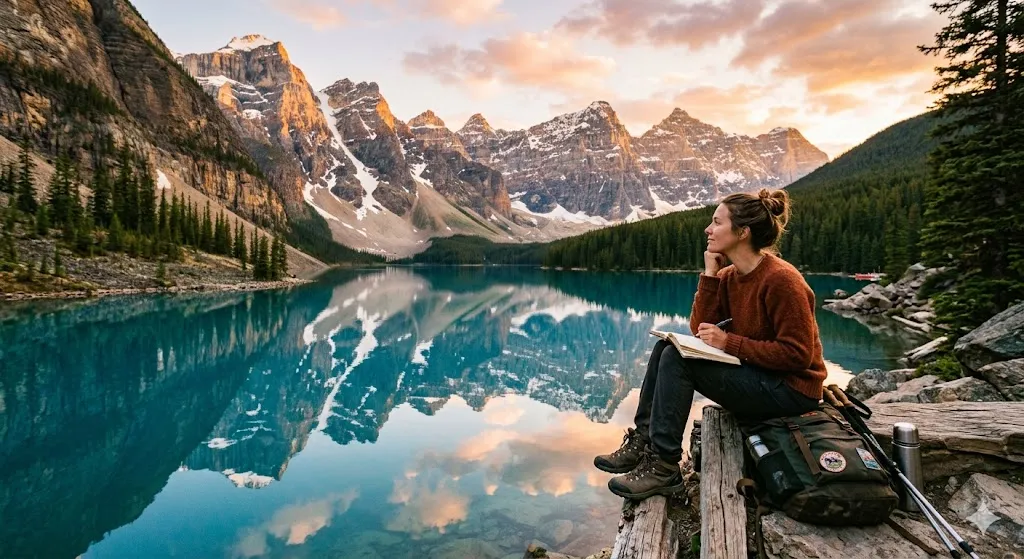
Perhaps the most profound shift that slow travel produces is in how travelers think about place itself. In conventional tourism, a destination is primarily a backdrop — a setting for the activities, photographs, and experiences that constitute the trip. The destination could, in some important sense, be replaced by a sufficiently similar one without fundamentally altering the experience.
Slow travel makes this substitution impossible. When you have spent three weeks in a single place, that place has become specific and irreplaceable in your experience. You know its particular smells in the morning, its particular quality of afternoon light, its particular sounds at different times of day. You know which bakery makes the better bread and which market stall has the most interesting vegetables. You have favorite walking routes and regular tables at regular cafés. The place is not a backdrop. It is a relationship.
This is why slow travelers so frequently return to the same places year after year — not because they have failed to discover new destinations but because they have developed genuine attachments to specific places that are worth renewing. The Tuscan village or the Turkish coastal town or the Japanese mountain town becomes, over repeated slow visits, something like a second home. And the desire for a second home, it turns out, is something that a luxury hotel can never adequately simulate.
The Criticism: Is Slow Travel a Privilege?
It would be dishonest to discuss slow travel without acknowledging the most common and legitimate criticism leveled at it: that it is a privilege available only to people with the time and financial flexibility to take extended trips. A single parent working two jobs cannot take a month in Portugal. A worker with ten days of annual leave cannot afford to spend all of them in one place.
This criticism is valid and important. Slow travel, in its fullest expression, does require resources — time above all, but also a certain financial stability that allows for longer-term planning and spending. In this respect, it is not fundamentally different from most forms of travel, all of which require resources of some kind. But the specific resources slow travel requires — time and flexibility — are distributed differently across the population than money, which means that slow travel is accessible to some people who could not afford luxury travel, and inaccessible to others who could.
What slow travel advocates would argue is that the philosophy, if not always the full practice, is more democratic than its critics suggest. You do not need to travel internationally or for a month to practice the principles of slow travel. Staying in a domestic destination for a week and genuinely immersing yourself in it — visiting the local market, talking to people, resisting the pull of the tourist highlights — is slow travel in its essential spirit. The point is not the destination or the duration but the quality of attention you bring to the experience.
What the Travel Industry Is Doing About It
The travel industry, never slow to recognize a shifting consumer preference, has been adapting to the slow travel movement with varying degrees of authenticity. A new category of accommodation — “aparthotels,” extended-stay properties, and boutique lodgings specifically designed for longer visits — has grown dramatically in the past decade. Tour operators now offer what they call “immersive” or “experiential” travel — cooking classes, craft workshops, language lessons, home visits — as counterparts to the standard sightseeing tour.
Some of this adaptation is genuine and valuable. Many boutique hotels and small guesthouses have always embodied the slow travel spirit — family-run, locally integrated, genuinely embedded in their communities — and the growing demand for slow travel has been good for them. The shift toward quality over quantity also benefits smaller, less-visited destinations that have historically been bypassed in favor of the famous but overcrowded tourist centers.
Some of it, inevitably, is marketing. The five-star resort that adds a token cooking class and calls itself an “immersive cultural experience” has not fundamentally changed what it is. Travelers who have genuinely internalized the slow travel philosophy are generally good at telling the difference, and their choices reflect it. Authenticity, once you have experienced the real thing, is remarkably difficult to fake convincingly.
A New Definition of What Travel Is For
At its deepest level, the slow travel movement represents a renegotiation of the purpose of travel itself — a collective questioning of assumptions so ingrained in modern tourism that most people have never examined them.
Is travel for accumulating experiences, or for deepening them? Is it for seeing famous things, or for understanding ordinary ones? Is it for rest from your life, or for a temporary alternative way of living? Is it for coming home with stories to tell, or with perspectives that quietly change how you see your everyday existence?
Luxury travel, at its best, answers some of these questions beautifully. There is genuine pleasure in great comfort, genuine beauty in exceptional design, genuine delight in being superbly cared for. These things have real value and should not be dismissed.
But for a growing number of travelers, they are not sufficient. The beautiful room and the perfect service and the famous view do not, by themselves, produce the sense of genuine encounter with the world that many people most deeply crave from travel. That sense requires time, attention, and a willingness to be inconvenienced — to be lost, confused, surprised, and occasionally wrong. It requires a temporary surrender of control that luxury travel, by definition, is designed to prevent.
Slow travel gives that surrender a name and a structure. It says: go somewhere and give it enough time to actually reveal itself to you. Do not treat it as a backdrop for your curated experience. Let it be a place, with all the specificity and imperfection that entails. And see what happens when you do.
The Bottom Line
The shift toward slow travel is not a trend in the superficial sense — a passing fashion that will be replaced by the next novelty. It reflects something deeper: a widespread and growing hunger for meaning, connection, and genuine rest in an age that provides very little of any of them.
Modern travelers are not choosing slow travel because it is cheaper, or more environmentally responsible, or better for their mental health, though it often is all of these things. They are choosing it because, when they are honest with themselves about what they most want from the experience of being somewhere new, the answer turns out to be something that speed cannot provide.
They want to know what it actually feels like to live somewhere else, even briefly. They want to wake up in a place until it starts to feel familiar. They want to be recognized by a stranger and understand why that small thing means so much. They want to return home changed in a way that lasts longer than a tan.
That is not a luxury. That is simply what travel — real travel — has always been for.
Frequently Asked Questions
What is slow travel?
Slow travel is an approach to tourism that emphasizes spending more time in fewer places rather than rushing through multiple destinations. It focuses on local experiences, meaningful connections, everyday life, and a deeper understanding of the destination.
Why is slow travel becoming more popular?
Slow travel appeals to people who are tired of rushed itineraries, constant connectivity, and highly curated tourism experiences. Travelers increasingly value rest, authenticity, flexibility, and meaningful experiences over simply visiting as many attractions as possible.
Is slow travel cheaper than a luxury vacation?
It often can be. Staying longer in one destination can reduce transportation costs, while apartments or extended-stay accommodations may cost less per night than luxury hotels. Cooking some meals and using local transportation can also lower expenses.
Is slow travel better for the environment?
Slow travel can reduce the environmental impact of a trip when it involves fewer flights, longer stays, and greater use of trains, public transportation, cycling, and walking. However, its overall environmental impact depends on factors such as how far you travel, how you get there, and where you stay.
How long do you need to travel slowly?
There is no fixed minimum. Slow travel can mean spending a month in another country, two weeks in one city, or even several days exploring a nearby destination without a packed itinerary. The defining feature is the pace and depth of the experience rather than a specific number of days.
Is slow travel only for digital nomads?
No. Remote workers and digital nomads may find slow travel particularly convenient, but anyone can adopt the principles. Travelers with limited vacation time can choose one destination instead of several or spend more time experiencing a single neighborhood.
What is the difference between slow travel and luxury travel?
Luxury travel generally emphasizes comfort, premium services, exclusivity, and convenience, while slow travel emphasizes time, immersion, local experiences, and connection. The two can overlap, however, because a traveler can enjoy luxury accommodation while still following a slower, more immersive itinerary.
Does slow travel mean avoiding tourist attractions?
Not necessarily. Slow travel does not require avoiding famous landmarks or popular attractions. Instead, it encourages travelers to balance major sights with unstructured time, local experiences, and opportunities to experience everyday life.
Is slow travel a privilege?
Extended slow travel can require significant time, money, and flexibility, so access is not equal for everyone. However, the philosophy can be applied on a smaller scale through shorter domestic trips, longer stays in one location, or simply avoiding an overly packed itinerary.
How can I start slow traveling?
Choose fewer destinations, stay longer, leave gaps in your itinerary, use local transportation, shop at local markets, and spend time in ordinary neighborhoods rather than only visiting major tourist attractions. The goal is to experience a place at a human pace rather than maximize the number of things you see.
About Ana Milojevik
Ana Milojevik is a travel and lifestyle writer who explores how changing habits, technology, and culture are reshaping the way people live and experience the world. Her work focuses on practical travel insights and thoughtful perspectives on modern tourism, from emerging travel trends to the growing appeal of slower, more meaningful experiences. Through clear, accessible writing, Ana helps readers discover new ways to travel with greater intention and curiosity.
Leave a Reply