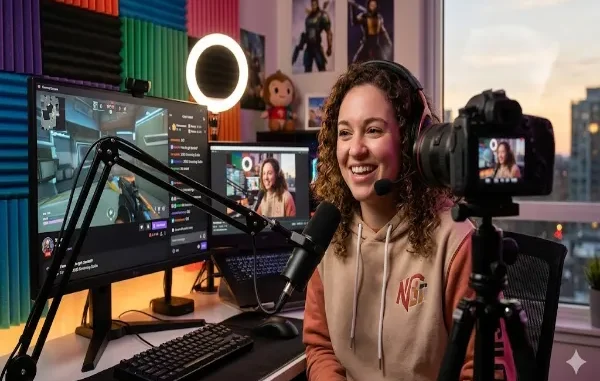
Yes, you can make money streaming in 2026—but most creators need 6–24 months of consistent work before earning meaningful income. Successful streamers treat content creation like a business, not a hobby.
Streaming has gone from a niche hobby to a legitimate career path in less than a decade. Platforms like Twitch, YouTube, TikTok Live, and Kick have collectively created an economy worth billions of dollars, and every day new creators are turning cameras on for the first time and building audiences that eventually pay real money.
But here is the part most “how to stream” guides skip over: the vast majority of streamers make very little money, at least in the beginning. The path from zero to sustainable income is longer, harder, and more strategic than the highlight reels of successful streamers suggest. This guide will not tell you that streaming is easy. What it will do is give you an honest, practical framework for building a streaming operation that has a realistic chance of generating income — without burning out in the first three months.
Is Streaming Still Worth Starting in 2026?
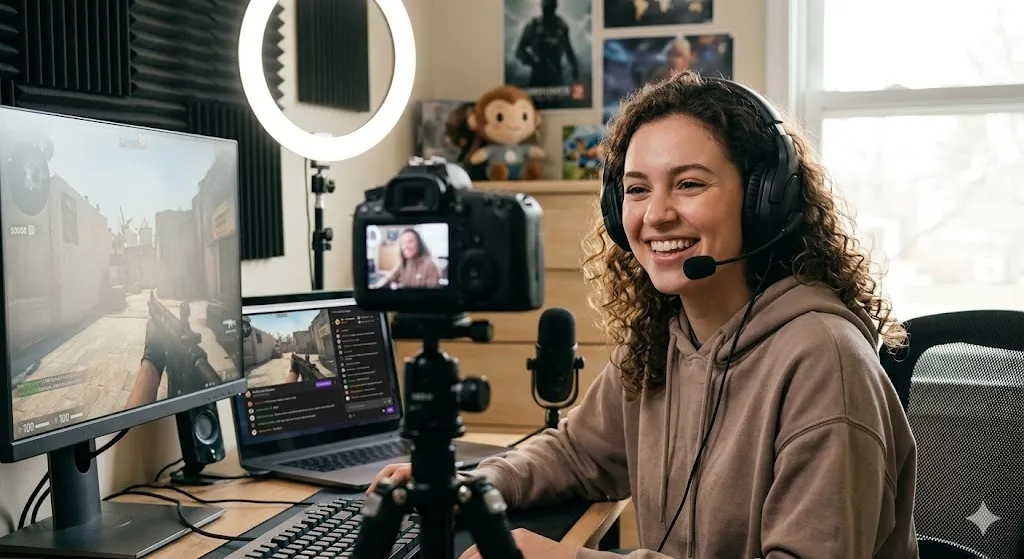
The first question any aspiring streamer should ask is whether the market is too crowded to break into. It is a fair concern. Twitch alone has hundreds of thousands of channels broadcasting at any given moment. YouTube has over 800 hours of video uploaded every minute. The competition for attention has never been more intense.
And yet people are still breaking through. New streamers still build audiences of thousands from scratch. New income streams are still opening up. The difference between 2018 and 2026 is not that opportunity has disappeared — it is that undifferentiated effort no longer works. Turning on a camera and playing a popular game is not a strategy. Having a clear identity, a specific audience, and a consistent content approach is.
The streamers who are succeeding in 2026 are not necessarily the most talented gamers, the most attractive personalities, or the people with the most expensive equipment. They are the ones who approached streaming with the same intentionality that any small business owner brings to building a customer base. That mindset shift — from “I want to stream” to “I am building a media business” — is the single most important thing you can do before you go live for the first time.
Understanding How Streamers Actually Make Money
Before talking about how to build an audience, it is worth understanding the actual revenue mechanics of streaming. Most beginners assume the money comes from subscribers and donations. The reality is considerably more varied, and understanding all the income streams available to you will shape how you build your channel from day one.
Subscriptions and Memberships
Platform subscriptions are the most visible income source in streaming. On Twitch, viewers pay monthly fees (typically $4.99, $9.99, or $24.99) to subscribe to a channel, receiving benefits like ad-free viewing, custom emotes, and subscriber-only chat access. YouTube has a similar system called channel memberships. The platform takes a cut — Twitch traditionally took 50% from most streamers, though this has been negotiated upward by larger creators — and the streamer keeps the remainder.
Subscriptions are valuable because they are recurring revenue. A base of 500 subscribers paying $4.99 per month generates roughly $1,250 monthly before platform fees — not a living wage on its own, but a meaningful foundation. Building to that number, however, typically takes one to two years of consistent effort for most streamers.
Donations and Tips
Direct donations from viewers — through platform-native systems like Twitch Bits or third-party tools like Streamlabs and StreamElements — represent another significant income category. Unlike subscriptions, donations are one-time and unpredictable, but they can be substantial. Some viewers donate hundreds of dollars in a single session to streamers they particularly value. The psychological dynamic of live streaming — the real-time interaction, the community atmosphere, the feeling of direct connection with the creator — makes viewers more generous than they might be with pre-recorded content.
Ad Revenue
Both Twitch and YouTube serve advertisements during streams, and streamers receive a portion of that ad revenue. The amount varies considerably based on the advertiser demand at any given time, the demographics of the streamer’s audience, and the number of concurrent viewers. Ad revenue on Twitch has historically been modest for all but the largest channels. YouTube’s ad revenue on streamed content tends to be more significant, particularly if the streams are saved as VODs (video on demand) that continue accumulating views after the live broadcast ends.
Sponsorships and Brand Deals
Sponsorships are where the real money is for mid-size and large streamers. A brand deal with a gaming peripheral company, an energy drink brand, a VPN service, or a game publisher can pay anywhere from a few hundred dollars for a small channel mention to tens of thousands of dollars for exclusive partnerships with large streamers. In 2026, the sponsorship market has expanded considerably beyond gaming-adjacent brands. Fashion, food delivery, financial services, software companies, and consumer goods brands are all active in the streaming sponsorship space.
The key leverage point for sponsorships is audience quality, not just audience size. A streamer with 2,000 highly engaged viewers in a specific demographic — say, young adult competitive gamers who spend heavily on hardware — can command better sponsorship rates than a streamer with 10,000 passively engaged viewers of mixed demographics. Knowing your audience and being able to articulate their characteristics to potential sponsors is an underrated business skill.
Merchandise
Merchandise has become a significant income stream for streamers with strong community identity. Custom apparel, accessories, and novelty items bearing a streamer’s logo, catchphrases, or character art can generate meaningful revenue, particularly around holiday periods or following viral moments that expand a channel’s reach. Print-on-demand services have eliminated most of the upfront cost and inventory risk that previously made merch inaccessible to smaller creators.
Affiliate Marketing
Affiliate marketing — earning a commission when viewers purchase products through links shared by the streamer — is accessible to creators at virtually any size. Amazon’s affiliate program, gaming-specific programs, and software affiliate schemes are all commonly used by streamers. While the commissions per sale are modest, a dedicated audience that trusts the streamer’s recommendations can generate consistent passive income from affiliate links in stream descriptions and overlays.
Exclusive Content and Subscriptions
Beyond platform subscriptions, many streamers in 2026 run Patreon pages, Substack newsletters, or Discord servers with paid tiers that offer exclusive content, early access, behind-the-scenes material, or direct interaction. These off-platform income streams are valuable because they are not subject to platform policy changes, fee structure adjustments, or algorithm shifts. Building a direct relationship with paying supporters — independent of any single platform — is increasingly considered essential for long-term sustainability.
Choosing Your Platform
The platform you choose to stream on is one of the most consequential early decisions you will make, and the right answer depends heavily on what you are streaming and who you are trying to reach.
Twitch
Twitch remains the dominant live streaming platform for gaming content. Its culture is deeply rooted in interactive, community-focused streaming, and its discovery mechanisms — browse pages organized by game, category directories, and raid culture — give new streamers some organic discoverability that is harder to find elsewhere. The platform’s primary weakness is that it offers limited support for the kind of discoverability that comes from algorithmic recommendation of pre-recorded content. You are largely dependent on live viewers finding you while you are broadcasting.
YouTube Live
YouTube’s streaming offering benefits enormously from the platform’s search and recommendation algorithm. Streams saved as VODs continue accumulating views indefinitely, meaning every hour you spend live on YouTube creates an asset that works for you long after you stop broadcasting. For streamers whose content has educational, informational, or entertainment value outside the live experience — cooking streams, tutorial content, commentary — YouTube’s VOD advantage is significant. The trade-off is that YouTube’s live streaming community culture is less developed than Twitch’s, and subscriber interaction during live streams can feel more passive.
Kick
Kick has emerged as a significant competitor by offering more favorable revenue splits (creators keep 95% of subscription revenue compared to Twitch’s 50% standard) and a less restrictive content policy. It has attracted a number of high-profile Twitch streamers and is growing its user base. Whether it can build the ecosystem depth that Twitch has developed over a decade remains an open question, but for streamers in categories where Kick has strong viewership, it is a legitimate primary platform option.
TikTok Live
TikTok Live operates differently from the other platforms. Its strength is in discovery — TikTok’s algorithm is among the most powerful recommendation engines in existence, and going live on TikTok can expose you to viewers who have never heard of you before in a way that Twitch and YouTube rarely replicate for new creators. The weakness is that TikTok’s streaming culture is oriented around short bursts of engagement rather than long-form community building, and monetization mechanisms are still less mature than established gaming platforms.
The Multi-Platform Question
Many experienced streamers eventually broadcast simultaneously to multiple platforms using tools like Restream or Streamyard. This makes sense once you have an established audience, but for beginners, splitting your effort across multiple platforms usually means building a weak presence everywhere rather than a strong one somewhere. Pick one platform, commit to it until you have genuine traction, and expand from there.
Setting Up Your Streaming Operation
Equipment and software decisions for streaming are an area where beginners consistently over-invest or mis-invest. The impulse to buy the best microphone, camera, and capture card before going live is understandable but counterproductive. You do not yet know what kind of streaming you will be doing long-term, what your audience will respond to, or what technical limitations matter most for your specific setup. Start with less, learn what actually needs improvement from real streaming experience, and upgrade deliberately.
The Minimum Viable Setup
A functional starting setup for streaming is more accessible than most beginners realize. A modern computer or gaming console handles the streaming output. A decent USB microphone in the $50 to $100 range — the Audio-Technica ATR2100x and the HyperX SoloCast are reliable entry points — produces audio quality that is entirely acceptable for a new channel. A modern smartphone camera is sufficient for a face cam if you want one early on. Streaming software like OBS Studio is free, powerful, and industry standard.
Audio quality matters more than video quality. Viewers will tolerate a lower-resolution camera, but poor audio — background noise, echo, distortion, or low volume — will cause them to leave almost immediately. If you are going to invest in one piece of equipment early, make it your microphone and its acoustic environment (a room with soft furnishings, or a simple reflection filter).
Internet Connection
Streaming requires a stable upload bandwidth. For 1080p streaming at 6,000 Kbps — a standard quality level — you need a reliable upload speed of at least 10 Mbps with minimal packet loss. Variable or unreliable connections produce buffering and dropped frames that degrade viewer experience significantly. If your home internet connection is unstable, a wired ethernet connection rather than Wi-Fi will solve most problems.
Stream Layout and Branding
Your stream’s visual identity — overlays, alerts, panels, and the overall aesthetic of your channel page — is worth investing time in early, even if it costs little money. Free tools like Canva and Streamlabs offer templates that can produce professional-looking results. Consistent visual branding across your channel page, overlays, social media profiles, and any off-platform presence creates the impression of a serious operation, which makes viewers more likely to treat you as one.
Building an Audience: What Actually Works
Audience building is where the gap between aspiring streamers and successful ones is widest. The mechanics of growth are not mysterious, but they require consistency, patience, and a willingness to do work that feels unrelated to the actual act of streaming.
Niche Down Ruthlessly
The single most effective strategic decision a new streamer can make is to narrow their focus to a specific niche. Not “gaming” — a specific game, or a specific style of play within a game. Not “variety content” — a specific type of variety content with a recognizable identity. The streamers who grow fastest in competitive environments are those who become the go-to destination for a specific audience with a specific interest.
Niching down feels counterintuitive because it seems to limit your potential audience. In practice, it does the opposite. A streamer who is known as the best source of deep, analytical content about a particular strategy game will attract every viewer who cares about that game and is looking for exactly that kind of content. A streamer who plays everything for a general audience is competing with everyone for no one’s specific attention.
Consistency Is More Important Than Quality
This sounds wrong, but the data from successful streamers overwhelmingly supports it. Streaming consistently — same days, same times, week after week — builds a habitual relationship with your audience. Viewers plan their viewing around predictable schedules. Algorithms on both Twitch and YouTube favor accounts that stream regularly. The psychological investment a viewer makes in following a streamer increases with each successive interaction.
In the early months, streaming consistently on a schedule is more valuable than any individual stream being exceptional. A brilliant one-off stream that no one sees because your channel has no established audience generates less long-term growth than twelve consecutive weekly streams of adequate quality that gradually build a small but loyal viewer base.
Clip, Edit, and Distribute
Live streaming alone is a slow growth mechanism for new channels. The streamers who grow fastest in 2026 treat their live streams as content factories and invest time in editing highlights, clips, and short-form content from their streams for distribution on TikTok, YouTube Shorts, Instagram Reels, and Twitter. A funny moment, an impressive play, an emotional reaction, or a compelling argument made during a stream can reach millions of people as a short clip who would never have found the original broadcast.
This content flywheel — live stream generates raw material, raw material becomes short-form clips, clips attract new viewers to the live stream — is the most effective organic growth mechanism available to streamers in the current platform environment. It requires additional editing time, but even basic clip-cutting skills using free tools like DaVinci Resolve or CapCut can produce shareable content.
Community Before Audience
There is an important distinction between having an audience and having a community. An audience watches you. A community participates with you. The channels that retain viewers long-term, that generate consistent subscription and donation revenue, and that survive the inevitable rough patches of slow growth are almost always those that have cultivated genuine community rather than passive viewership.
Building community means interacting with chat meaningfully rather than just reading out names. It means creating spaces — Discord servers, subreddits, social media groups — where your viewers interact with each other, not just with you. It means learning the names and stories of your regulars. It means making viewers feel that being part of your channel is an identity, not just an entertainment choice.
Realistic Income Timelines
One of the most damaging misconceptions about streaming is the timeline for earning meaningful income. The stories that circulate — the streamer who blew up in three months, the person who quit their job after six months of streaming — are real but represent extreme outliers. Understanding a more typical progression will save you enormous frustration.
In the first six months, most streamers with consistent effort will build an audience of tens to low hundreds of concurrent viewers, achieve platform affiliate status (which unlocks basic monetization), and earn token amounts — perhaps enough to cover streaming costs. This phase is about learning: learning what content resonates, learning how to present yourself on camera, learning the technical aspects of production, and learning who your audience is.
In the six to eighteen month range, streamers who have found their niche and maintained consistency typically see more meaningful growth. Concurrent viewership in the hundreds becomes achievable. Monthly revenue from subscriptions, donations, and small sponsorships might reach a few hundred dollars. This is still not a living wage, but it is validation that the model works.
Beyond eighteen months to two years, the range of outcomes expands considerably. Some streamers plateau. Others break through to the level where streaming becomes a primary or supplementary income source. The differentiating factors are usually some combination of a viral moment that accelerates growth, a particularly well-defined niche with strong monetization potential, or the compound effect of long-term community building reaching a tipping point.
Common Mistakes That Kill Channels Early
Knowing what not to do is as valuable as knowing what to do. Several patterns appear consistently in channels that fail to gain traction despite genuine effort.
Streaming without a face cam or microphone personality in the early stages makes it very difficult to build the personal connection that drives community. People follow streamers, not games. If viewers cannot connect with you as a person, they have little reason to return to your channel specifically rather than finding another broadcaster of the same game.
Chasing trending games without strategic consideration is another common trap. The logic seems sound — stream what people are watching — but popular games have the most competition. A new streamer streaming a game with 50,000 concurrent viewers across the platform is invisible on page 47 of the browse directory. A new streamer streaming a game with 500 concurrent viewers across the platform can appear near the top of the directory and actually be discovered.
Neglecting the off-stream work — clip creation, social media presence, community management, VOD editing — means relying entirely on the live stream for growth. In 2026, the most efficient growth comes from the content that extends beyond the live broadcast.
Finally, stopping too early is perhaps the most common reason capable streamers fail. Growth in streaming is not linear. There are long plateaus followed by sudden jumps, frustrating dips followed by unexpected recoveries. Most streamers who quit cite the slow early phase as the reason, without knowing that they were often closer to a breakthrough than they realized.
Final Thoughts: Treating Streaming Like a Business
The streamers who make sustainable money in 2026 are, without exception, those who treat their channels as businesses. That means tracking metrics — concurrent viewership, subscriber growth, revenue per stream — and making data-informed decisions about content strategy. It means understanding their audience demographics well enough to pitch sponsors. It means diversifying income streams so that a platform policy change or algorithm shift cannot destroy the operation overnight. It means reinvesting early revenue into equipment, editing, and community tools rather than treating it as pure profit.
None of this makes streaming less creative or less fun. If anything, understanding the business mechanics frees you to make better creative decisions, because you know what is working and why. The streamers who are most creatively free are usually the ones who have built the most sustainable financial foundations under their channels.
Streaming in 2026 is genuinely competitive. It is also genuinely possible. The gap between where you start and where you want to be is bridged not by luck or talent alone, but by strategy, consistency, and the patience to build something real over time.
Start small. Stay consistent. Know your audience. Build your community. The income follows.
FAQ Suggestions
Most beginner streamers make little to no income in their first months. Earnings usually grow only after building a consistent audience.
Yes. Small streamers can earn through donations, affiliate marketing, sponsorships, and memberships.
Kick offers the highest subscription split, while YouTube can provide stronger long-term ad revenue through VODs.
Most creators need 6–24 months of consistent effort before earning meaningful income.
Leave a Reply