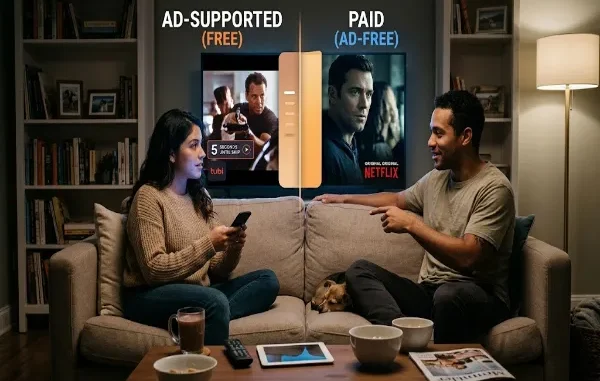
Streaming services have changed how people watch movies, television shows, documentaries, and live entertainment. Instead of relying on traditional television schedules or purchasing individual titles, viewers can access extensive libraries of content through internet-connected devices. However, as subscription prices increase and more platforms compete for attention, many people are reconsidering whether paying for streaming is really necessary.
One alternative is ad-supported streaming, which allows viewers to watch content for free or at a lower subscription price in exchange for watching advertisements. Paid, ad-free streaming plans offer a different experience, often with fewer interruptions and additional features depending on the service.
So, which option offers better value? The answer depends on your viewing habits, budget, tolerance for advertising, and the content you want to watch. Understanding the differences between free, ad-supported, and paid streaming can help you choose the option that makes the most sense for your household.
What Is Ad-Supported Streaming?
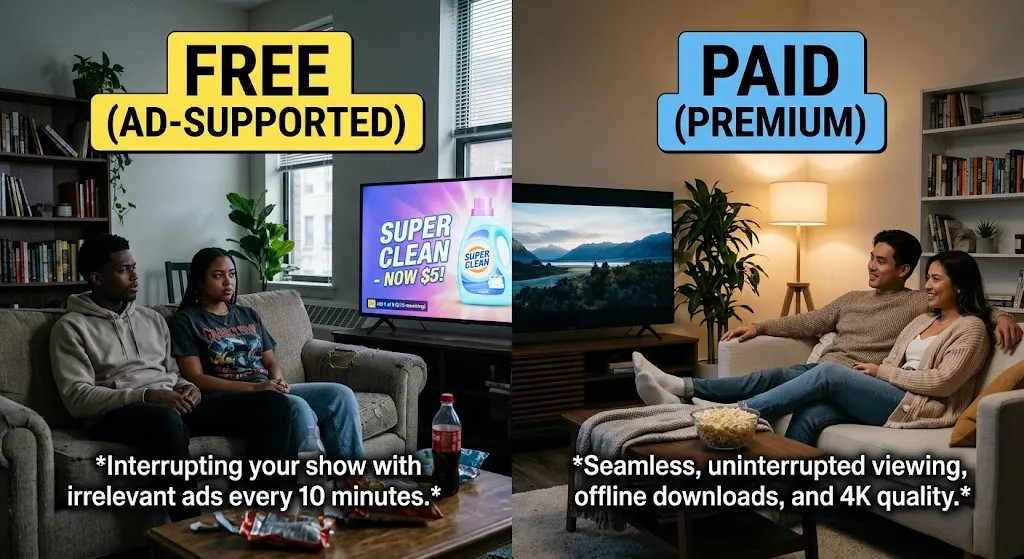
Ad-supported streaming is a model in which a streaming platform generates revenue by displaying advertisements before, during, or sometimes after its content. Instead of relying entirely on subscription payments, the service earns money from advertisers who want to reach its audience.
Some platforms offer completely free, ad-supported content. Others provide a lower-priced subscription tier that includes advertisements alongside a more extensive selection of movies and television shows.
Examples of free, ad-supported services include Tubi, Pluto TV, and The Roku Channel in supported markets. Availability, content libraries, and features vary by country and may change over time.
Ad-supported streaming can include movies, television series, documentaries, news, and live or scheduled programming. Some services focus on on-demand entertainment, while others offer channels that resemble traditional television.
For viewers who want to reduce entertainment expenses, these platforms can provide access to a substantial amount of content without requiring another full-price monthly subscription.
What Is Paid Streaming?
Paid streaming generally refers to a service or subscription tier for which viewers pay a recurring fee to access entertainment. Depending on the platform and plan, subscribers may receive an ad-free experience, exclusive original productions, newly released titles, offline downloads, or access to higher-quality video and audio.
Popular subscription services include Netflix, Disney+, Max, and Amazon Prime Video, although their available plans and features differ by country.
Not every paid plan is ad-free. Some subscription services offer lower-priced plans that include advertisements, while reserving ad-free viewing or certain additional features for more expensive tiers.
The main advantage of paid streaming is that subscribers can choose services based on particular shows, films, genres, or exclusive content. Premium plans may also provide a more comfortable viewing experience for people who regularly watch long movies or multiple episodes in one sitting.
However, subscribing to several platforms at once can become expensive. When every service has its own library and exclusive productions, viewers may find themselves paying for multiple subscriptions to watch everything they want.
Free vs. Paid Streaming: The Main Differences
Although both options deliver entertainment over the internet, they differ in cost, viewing experience, content availability, and additional features.
| Feature | Free ad-supported streaming | Paid streaming |
|---|---|---|
| Monthly subscription | Usually free | Requires a subscription fee |
| Advertisements | Usually included | Depends on the plan |
| Content selection | Varies by service | Often includes subscription-exclusive titles |
| Viewing interruptions | Common | Limited or absent on ad-free plans |
| Offline downloads | Often unavailable | Available on some plans |
| Video quality | Varies by platform | Depends on the plan and device |
| Exclusive content | Available on some services | Often a major selling point |
| Account features | Varies by service | May include additional profiles or other benefits |
These differences are general rather than universal. A free platform may offer excellent picture quality, while a paid plan may still include advertisements or lack offline downloads.
Before choosing a service, check the specific features available in your country.
The Advantages of Free, Ad-Supported Streaming
1. You Can Save Money
The biggest advantage of free streaming is straightforward: you can watch entertainment without adding another monthly subscription bill.
For households already paying for internet access and other digital services, eliminating even one or two subscriptions can make a noticeable difference over time.
For example, someone who cancels a hypothetical $12 monthly subscription saves $144 over a year, provided they do not replace it with another paid service.
Free streaming is particularly useful for casual viewers who watch television occasionally rather than every day.
2. There Is No Long-Term Subscription Commitment
Most free, ad-supported platforms do not require a paid membership. Viewers can explore available content without worrying about renewal dates or recurring subscription charges.
This flexibility makes free services useful when you want something to watch during a holiday, a quiet evening, or a temporary break from your usual streaming subscriptions.
You can also combine several free services to explore different genres without paying for each one.
3. You Can Discover Unexpected Content
Free streaming platforms often include older films, independent productions, classic television programs, documentaries, and niche genres.
Their libraries may not always contain the newest blockbusters, but they can introduce viewers to titles they might never have searched for on a premium service.
For people who enjoy browsing rather than watching only specific releases, this variety can be an important benefit.
4. Free Streaming Can Supplement Paid Subscriptions
You do not necessarily have to choose between free and paid streaming.
A practical approach is to use free services for everyday entertainment while keeping one paid subscription for exclusive shows or films you genuinely want to watch.
This arrangement can provide a broad selection of content without requiring several simultaneous subscriptions.
The Disadvantages of Ad-Supported Streaming
1. Advertisements Interrupt the Viewing Experience
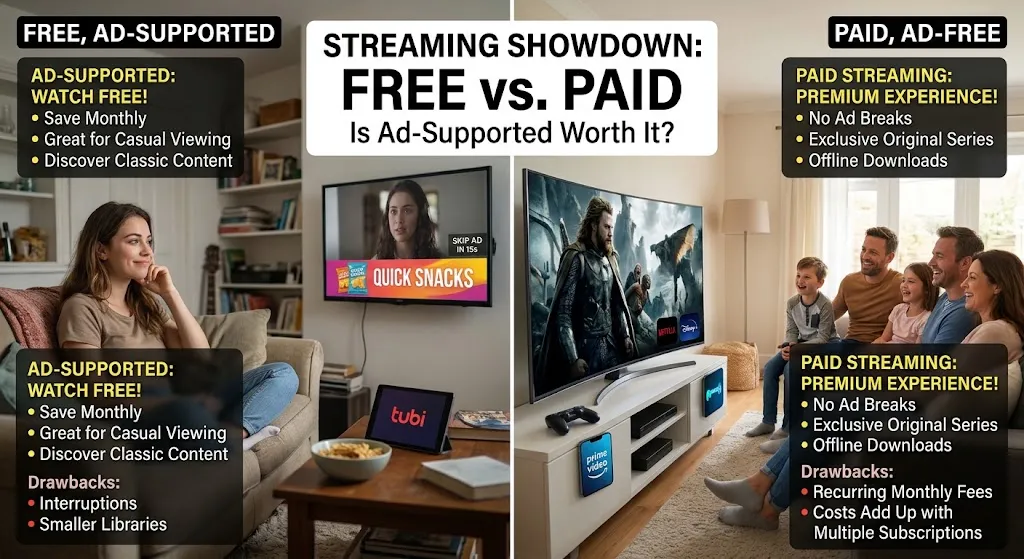
The most obvious drawback is advertising. Commercials may appear before a movie begins or interrupt a program at several points.
For some viewers, these interruptions are a minor inconvenience. Others find them distracting, especially during suspenseful scenes, emotional moments, or longer films.
The frequency and length of advertisements vary by platform, program, country, and advertising policy. Some services provide fewer interruptions than others, so it is worth trying a platform before deciding whether the experience suits you.
2. The Content Library May Be Limited
Free services do not necessarily have the same titles as premium subscriptions. Popular new releases, major studio productions, and exclusive original series may be unavailable.
Licensing agreements also affect which titles can be streamed in different countries. A movie available on one platform in one region may be missing elsewhere.
If you subscribe primarily to watch a particular series or follow new releases, a free service may not be a suitable replacement.
3. Availability and Features Can Change
Streaming platforms regularly update their libraries and service features. Movies can disappear when licensing agreements expire, and a service may change its advertising model or regional availability.
Free streaming therefore works best when you are flexible about what you watch. If you depend on a specific title being available at a particular time, check the platform’s current catalog before making plans.
4. Free Does Not Always Mean Private
Ad-supported platforms may collect information about viewing behavior, device usage, and interactions to support advertising, personalization, analytics, or service operation.
The exact practices differ by provider and jurisdiction. Read the privacy policy and review available advertising and data-sharing settings if privacy is a concern.
Use official apps or websites, and be cautious of unofficial streaming pages that promise free access to premium content but request unnecessary personal information or downloads.
Why Paid Streaming May Be Worth the Money
1. Fewer Interruptions
For viewers who watch movies regularly, an ad-free subscription can provide a more continuous experience.
Without commercial breaks, it may be easier to stay immersed in a story or enjoy several episodes in succession. This benefit can be particularly valuable for families watching together or people who prefer uninterrupted films.
However, confirm that the particular subscription tier is genuinely ad-free. Some services include advertising even with paid memberships.
2. Access to Exclusive Shows and Movies
Original productions and exclusive licensing agreements are among the main reasons people pay for streaming.
If your favorite series is available only on a particular service, a free alternative may not provide an equivalent experience.
Before subscribing, identify the programs you actually want to watch. Paying for a platform simply because it has a large catalog may not be worthwhile if most of its content does not interest you.
3. Additional Features
Depending on the service and subscription level, paid streaming may offer offline downloads, higher-resolution video, improved audio options, simultaneous streams, or additional household profiles.
These features are useful for travelers, families, and viewers who watch content across multiple devices.
Nevertheless, they should not be assumed to come with every paid subscription. Compare the plan details carefully, particularly when deciding between an ad-supported and an ad-free tier.
4. Better Value for Frequent Viewers
A paid subscription may be worthwhile if you use it regularly and consistently find content you enjoy.
For example, a household that watches several movies each week may get considerable value from a service with a strong film library. Someone who watches only once or twice a month may find it harder to justify the recurring expense.
The key is to evaluate how much use you get from the subscription rather than assuming that paid entertainment is automatically better.
Is Ad-Supported Streaming Really Cheaper?
Free streaming can reduce your expenses, but the real value depends on what you watch and how much time you spend watching advertisements.
Consider a hypothetical comparison between a free platform and a paid subscription costing $12 per month.
| Annual cost | Free streaming | Paid subscription |
|---|---|---|
| Subscription fees | $0 | $144 |
| Internet access | Existing cost | Existing cost |
| Advertising | Usually included | Depends on plan |
| Potential annual savings | $144 | — |
This example assumes the same internet connection is used for both options and excludes any additional services or equipment. Actual subscription prices vary.
For someone who watches a few hours of television each week, free streaming may offer excellent value. For someone who watches movies daily and strongly dislikes advertisements, paying for an ad-free plan may be worth the extra expense.
It is also important to consider the cost of subscribing to several services. Three subscriptions costing $12 each would amount to $432 per year. Rotating between platforms instead of maintaining all three simultaneously could reduce that expense.
How to Decide Which Streaming Option Is Right for You
Choosing the right streaming model becomes easier when you consider your priorities.
Choose Free Streaming If:
- You want to reduce monthly entertainment expenses.
- You are comfortable watching advertisements.
- You enjoy older films, classic television, documentaries, and varied programming.
- You do not need access to every new release.
- You prefer not to manage recurring subscriptions.
Choose Paid Streaming If:
- You regularly watch specific exclusive series or movies.
- You prefer an ad-free experience and the selected plan offers it.
- You want features such as offline downloads or additional simultaneous streams.
- You watch enough content to justify the monthly fee.
- You value a particular platform’s catalog and features.
Consider Combining Both Options If:
- You want to save money without losing access to selected premium content.
- You watch different genres across several platforms.
- You can subscribe temporarily when a new season or movie becomes available.
- You are willing to use free services for general entertainment and pay only for content you particularly value.
For many households, combining free services with one carefully selected paid subscription provides a sensible balance between cost and convenience.
Practical Tips for Getting More Value From Streaming

You can make streaming more affordable without giving up the shows and movies you enjoy.
Review your subscriptions regularly. Check which services you actually use and cancel those that no longer provide enough value.
Rotate paid subscriptions. Instead of paying for several services throughout the year, subscribe to one at a time when it has content you want to watch.
Try free services first. Before paying for a movie or show, check whether it is legally available on a free platform in your region.
Compare subscription tiers. If you are considering a paid service, compare its ad-supported and ad-free plans, including the number of screens, video quality, and download restrictions.
Check regional availability. Catalogs and prices vary by country, so confirm that the service offers the content you want where you live.
Protect your accounts and devices. Use official streaming apps, strong passwords, and available privacy settings. Avoid suspicious websites that promise unauthorized access to premium libraries.
Set a monthly entertainment budget. Decide how much you are comfortable spending and choose services that fit within that limit.
Final Verdict: Is Ad-Supported Streaming Worth It?
For many viewers, ad-supported streaming is absolutely worth considering. It provides an affordable way to watch movies, television programs, and other entertainment without paying another monthly subscription fee.
Its main disadvantages are advertising interruptions and the possibility of missing certain premium or exclusive titles. Paid streaming, meanwhile, can offer a more convenient experience and access to specific content, but the cost can add up quickly when multiple subscriptions are involved.
The best choice is not necessarily the service with the largest catalog or the most expensive plan. It is the option that provides the entertainment you want at a price you can comfortably afford.
Start with free streaming if saving money is your priority. If you discover that advertisements are too disruptive or a particular show is worth paying for, consider adding a paid subscription. By choosing deliberately rather than subscribing automatically, you can enjoy more entertainment while keeping your spending under control.
Leave a Reply